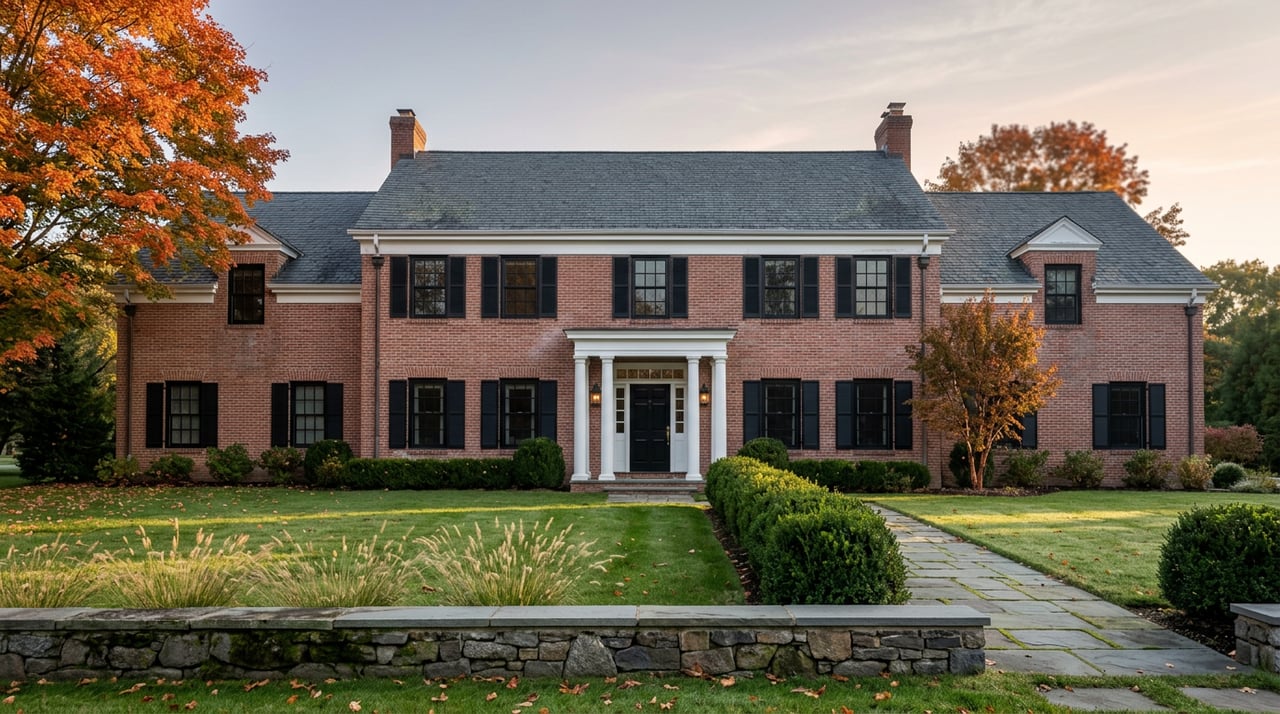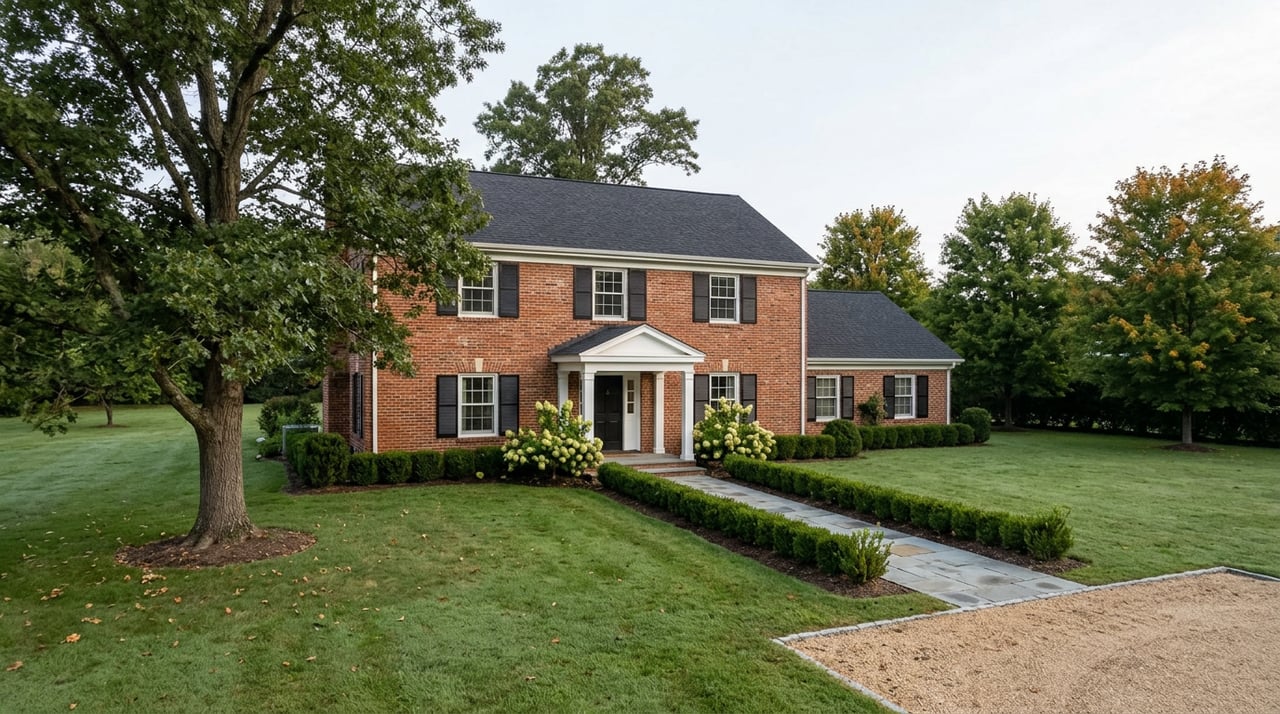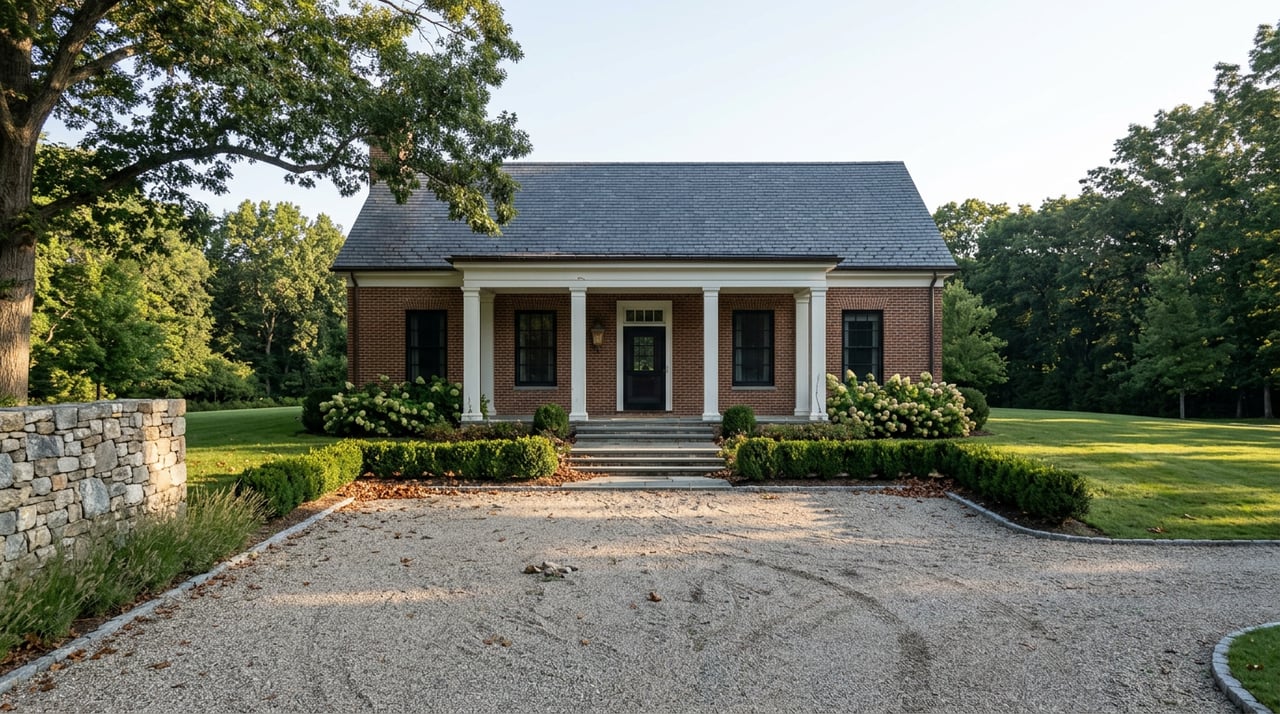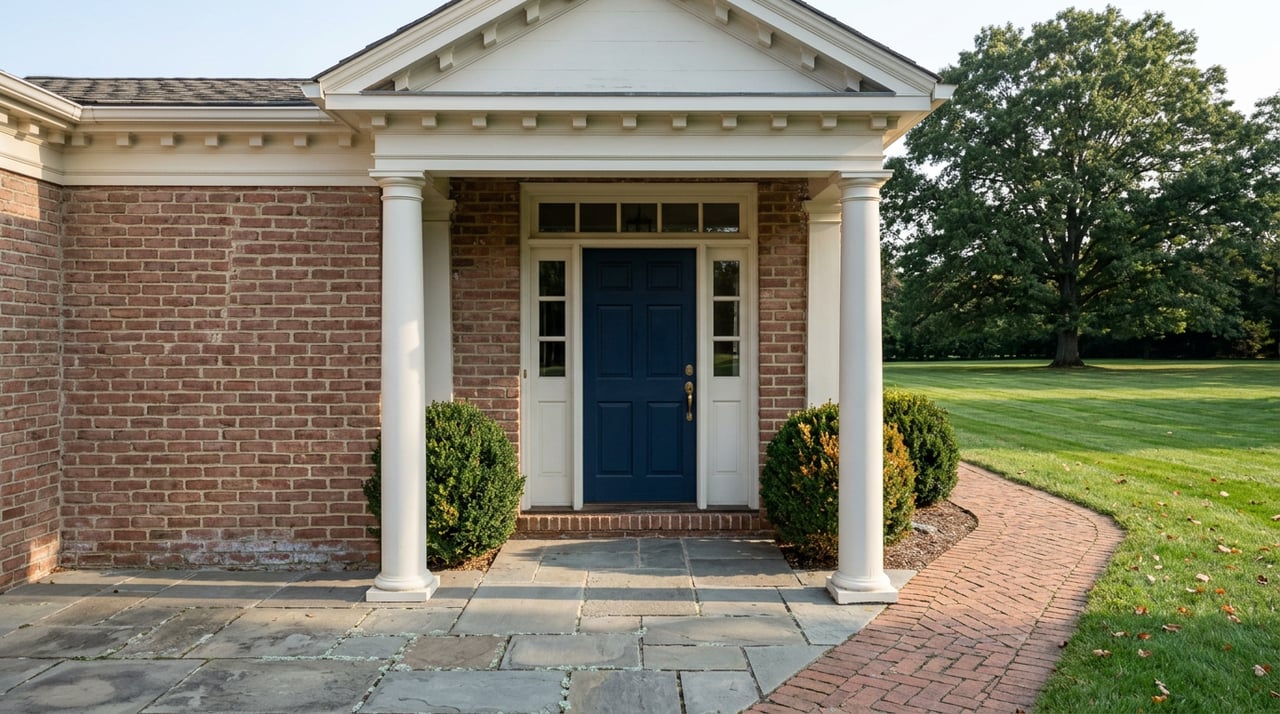
A colonial on Main Street goes under contract. The buyer's inspector flags original six-over-six windows that need work, and the buyer's contractor quotes vinyl replacements, cheaper, faster, done in a weekend. Then someone mentions the house sits inside the Farmington Historic District, the one on the National Register since 1972, and the buyer assumes that settles it: permission required, plan accordingly.
It doesn't settle anything. The National Register listing is an honor roll. It carries no design review, no permit requirement, no board to call. The actual gatekeeper is a separate local ordinance, and in Farmington there are two of them, covering two different maps, run by two different commissions that don't share a boundary line. Knowing which one applies to a specific lot, or whether either does, is the kind of detail that changes a renovation timeline and belongs in the conversation before an offer goes in, not after.
The Plaque Doesn't Regulate Anything
The Farmington Historic District earned its spot on the National Register of Historic Places in 1972. It covers roughly 275 acres of the town center, an area that includes 115 buildings built before 1835 and landmarks like Hill-Stead, the Stanley-Whitman House, the Austin F. Williams Carriage House and House, and the First Church of Christ, Congregational. That boundary hasn't expanded since the original 1972 listing.
None of that federal recognition requires a homeowner to ask permission for anything. It's a preservation credential, not a permitting authority. The teeth come from a separate track entirely: a local historic district created by town ordinance under state enabling legislation, which is a different instrument with a different history and a different map.
Two Boards, Two Maps, One Town
Farmington actually runs two of these local ordinance districts, and they don't overlap.
The Farmington Historic District Commission oversees the village center district, established by town ordinance in 1965 and expanded in 2007. The boundary map itself isn't static. The Town Council approved the current version on June 9, 2025, effective July 9, 2025, which means the line on file today is more recent than most closing documents anyone pulled a year or two ago.
The Unionville Historic District Commission governs a separate district in Farmington's Unionville section, established in 2008. Different board, different meeting schedule, different application, different set of streets. A property just outside one boundary and inside the other faces an entirely different review process, and a property outside both faces none at all, regardless of how old the house is or whether it appears on anyone's historic homes list.
For a buyer comparing two similarly priced antique houses, this is the fact worth confirming before waiving any contingency tied to exterior work. For a seller planning to refresh a facade before listing, it's the fact that determines whether that refresh needs a hearing first.
What the Certificate Actually Covers, and What It Doesn't
Either commission requires a Certificate of Appropriateness before a building permit or demolition permit can be issued for exterior work, and the certificate is required even when no building permit would otherwise be needed. The review authority extends to:
- Exterior windows, doors, and light fixtures
- Signs and above-ground utility structures
- Building materials and their texture
- Parking area creation or expansion
What it explicitly does not reach is paint color. The ordinance carves that out by name. Interior renovations are similarly outside the commission's purview entirely, so a full kitchen gut or a finished basement never needs to cross either board's desk.
That distinction matters more than it sounds. A buyer who assumes historic district status means every choice gets reviewed will overbudget for approval time on projects that never required it, while underbudgeting for the ones that genuinely do, like a replacement window order that has to match a specific muntin pattern.
The Clock That Actually Matters for a Closing Date
Once an application is filed, the commission has 65 days to act. If it doesn't, the application is automatically approved with no further evidence needed. That cuts both ways for a transaction timeline. A seller who wants pre-listing exterior work done and approved has a hard outside date to plan around. A buyer under contract who's counting on a specific renovation happening quickly after closing needs to build that same window into their own schedule, particularly since a public hearing is required for most applications, with certified mail notice going out to abutting property owners at least ten days ahead of the hearing date.
That notice requirement is worth knowing for another reason. Neighbors get a formal heads up before a hearing on your project. That's not a hurdle so much as a fact worth mentioning if a buyer is nervous about how a planned addition will be received on the block.
The Demolition Wrinkle Few Buyers Ask About
Anyone eyeing a teardown lot inside either district should know about the 90-day rule. Once a demolition permit is issued for a building inside the district, demolition can't happen for 90 days if the commission or the state historical commission is actively working to find a buyer who would preserve the structure or some other alternative to tearing it down. During that window, the town may abate the property's real estate taxes. Nothing in the ordinance forces an owner to sell, but the delay itself is real, and it's the kind of detail that belongs in due diligence for anyone assembling a lot for new construction rather than restoration.
Solar Is the One Thing They Can't Easily Say No To
For a buyer weighing rooftop solar against a rising CT electric bill, there's a specific carve-out worth knowing. An application for a solar energy system can't be denied unless the commission finds the installation would substantially impair the historic character of the district. That's a materially higher bar than the general "is this appropriate" standard applied to everything else, and it exists in state law specifically to keep historic district status from becoming a blanket veto on renewable energy.
What's Actually Moving Through Both Boards Right Now
This isn't theoretical process. As of this past July, live applications on file include a proposed exterior sign at 769 Farmington Avenue for a business called Joy Susan, a greenhouse addition at 230 Main Street under Unionville Historic District Commission review, and separate applications tied to 15 School Street and 23 School Street. These are ordinary, small-scale requests, exactly the kind a homeowner files for a fence, a sign, or a garden structure, and they're a useful reminder that both commissions meet regularly and actively review real applications, not just landmark-scale projects.
One more detail specific to Unionville: owners there have access to the Preservation Connecticut Homeowner Tax Credit, a benefit tied specifically to that district rather than to historic district status generally. It's the kind of incentive that can offset the cost of doing exterior work to the commission's standard rather than around it.
What This Means If You're Weighing a Farmington Property
Before writing an offer on an older home here, confirm which map the lot actually sits inside, the Farmington Village district, the Unionville district, both, or neither. A National Register plaque tells you the house has historical significance. It tells you nothing about whether you need a certificate to swap a door.
If you're selling, the same logic applies in reverse. A pre-listing refresh that touches windows, exterior materials, or signage may need a certificate first, and that 65-day clock should factor into how far ahead you plan the work relative to your target list date.
A Few Direct Questions
Does painting my house require approval from either commission? No. Paint color is explicitly excluded from the ordinance's design review authority in both districts.
If my house is old, is it automatically inside one of the local districts? No. Age alone doesn't place a property inside either boundary. The district lines are specific and were most recently redrawn for the Farmington Village district effective July 2025. A property has to sit inside the mapped boundary to be subject to review, regardless of how historic it looks.
Does interior renovation need a certificate? No. Both commissions' authority is limited to exterior architectural features, signage, and parking. Interior work falls outside their review entirely.
Buying or selling a period property in Farmington means working through details like these before they become a surprise mid-transaction, not after. If you're weighing a purchase inside the village center, in Unionville, or anywhere else in the Farmington Valley, Ellen Sebastian can walk you through what a specific address actually requires, and what it doesn't, before you make your next move. Let's Connect.