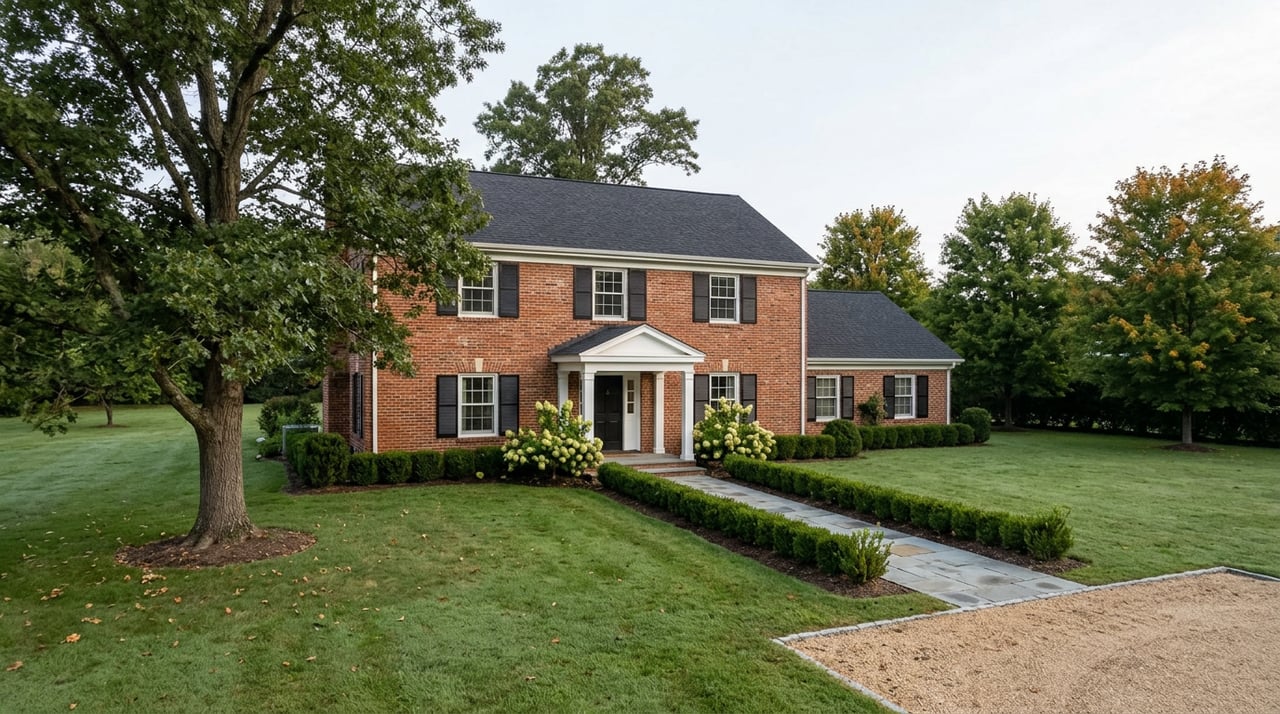
Most Connecticut homeowners have made peace with a simple assumption: the mill rate only moves in one direction. Grand lists creep up, school budgets creep up, and so does the number on the tax bill. Canton just spent the better part of three months proving that assumption wrong, and the way it happened tells a buyer more about the town's finances than any single median price ever could.
Twice this year, Canton voters walked into the Canton Community Center and voted down the town's proposed budget. The first version, a $55.1 million combined town and school plan, would have pushed the mill rate from 33.50 up to 35.11. Voters rejected it 1,148 to 796. Officials went back, cut the plan to $53.78 million, and brought a revised mill rate of 33.94 back to referendum on June 2. Voters rejected that one too. Only after a third round of cuts, roughly $950,000 more pulled from the school, capital, selectmen, and finance board lines, did the town land on a mill rate of 33.20, a figure that actually sits 0.3 mills below the rate homeowners were already paying the year before.
That is the detail worth sitting with before you look at a single listing in this town. Canton's grand list did not shrink. Its costs did not fall on their own. The lower rate exists because residents said no twice and forced the boards to find the money elsewhere. If you are comparing Canton to a neighboring town on the strength of a tax rate snapshot, you are looking at the output of a political fight, not a stable baseline.
What the Three Numbers Actually Cost a Homeowner
Connecticut calculates property tax by taking a home's assessed value, which runs at 70 percent of its appraised market value, and multiplying it against the mill rate per thousand dollars of assessment. Run that formula across Canton's three budget drafts and the stakes become concrete rather than abstract. Under the first, rejected proposal, town officials estimated the median assessed home would have paid about $349.72 more for the year. Under the second, also rejected, the increase for that same median home worked out closer to $121. Under the final version that survived, a home assessed at $275,000 actually paid about $82.50 less than it had the year before.
Three drafts, three outcomes, one property. That range, a swing of over $400 depending on which Tuesday you happened to be voting, is the kind of volatility that never shows up in a listing sheet. It only shows up if you were tracking the town's finances in real time this year, which is exactly why it matters to a buyer weighing Canton against a town with a quieter budget season.
The Median That Won't Hold Still
Even before the mill rate story, Canton's headline home price refuses to sit in one place. One widely cited data source put the town's median sale price at $512,000 in March 2026, with homes moving in a median of seven days. A separate source tracking trailing twelve-month closings through June 2026 put Canton's median single-family price at $474,950. That is a spread of nearly $40,000 depending on which month you check and which twelve-month window the source is using.
Part of that instability is simple math. Canton sells somewhere in the neighborhood of 80 to 90 homes a year, not the hundreds a town like West Hartford moves. When your sample size is that small, a handful of high-end colonials closing in one month can swing the median meaningfully compared to a month dominated by starter capes. The other part of the instability is that Canton is not one housing market wearing a single price tag. It is at least three.
Three Cantons, Three Different Starting Points
Collinsville, the old mill village along the Farmington River, is the most walkable and the most consistently priced of the three. As of May 2026, homes there carried a median list price of $462,500, with the trailing twelve-month median sale price at $463,560, up 8 percent year over year. Homes in Collinsville were also selling fast, a median of 38 days on market against a broader national average of 58. It is a village of smaller lots and antique homes clustered near the old Collinsville Axe Factory building, now home to local businesses, and that sense of center shows up in both the pace of sales and the tightness of the price range.
Canton Center tells a different story. This is the town's historic district, built around the green, and its listing sheet this year stretched from a $249,500 two-bedroom home to an $800,000 five-bedroom home, with several properties in between, including a $589,900 home under contract and a $449,900 listing. That is not a tight band around a median. It is a district where the historic housing stock varies enormously in size and condition, and where the town's Historic District designation adds a layer of character, and sometimes renovation constraints, that a buyer needs to price into their decision separately from the mill rate.
Canton Valley and the town's newer subdivisions represent the third pocket. Here you find 1970s and 80s contemporary and colonial construction on larger lots, often an acre or more, arranged along cul-de-sacs rather than around a village green. One listing this year described a three-bedroom contemporary cape built in 1978, sitting on over an acre within a popular Canton Valley subdivision, a good snapshot of what this part of town typically offers: more land, more privacy, and a longer drive to the shops on Depot Street. Central Canton also has options at the other end of the buyer spectrum, including Oxbow Ridge, a 55-and-over community of end-unit condominiums built for downsizers who want less upkeep without leaving town.
| Character | Recent Price Signal | Typical Lot | |
|---|---|---|---|
| Collinsville | Walkable mill village, condos and smaller antique homes | Median sale price $463,560 (trailing 12 months through May 2026), up 8% year over year; median 38 days on market | Village-scale, often under half an acre |
| Canton Center | Historic District homes around the green | Listings this year ranged from $249,500 to $800,000 | Larger, tree-lined half-acre to full-acre parcels |
| Canton Valley / outlying subdivisions | 1970s-80s contemporary and colonial construction | No single reliable published median; individual listings this year priced from the high $300s | Often an acre or more, cul-de-sac layouts |
Why the Same Rate Cut Doesn't Save Everyone the Same Money
Here is where the mill rate story and the neighborhood story intersect. A 0.3-mill reduction sounds like a flat, uniform benefit. It is not, because the dollar amount it produces depends entirely on assessed value, and assessed value tracks the price differences between these three pockets. Apply that same 0.3-mill cut to a Collinsville condo assessed well below the town's median and the savings are a modest sum. Apply it to one of Canton Center's larger historic colonials, or a Canton Valley home on an acre-plus lot with a higher assessment, and the same rate cut returns meaningfully more in absolute dollars. The mechanism is identical everywhere in town. The payoff scales with what the town already decided your home is worth.
What This Means If You're Comparing Canton to Other Towns This Fall
If you are cross-shopping Canton against Avon, Simsbury, or Farmington using a single median number, you are comparing an average of three genuinely different housing markets against towns that may be more internally consistent. Ask which Canton pocket a listing actually sits in before you compare its price to a townwide figure. Ask when the assessed value on a specific property was last set, since that number, not the sale price, is what the mill rate actually taxes. And know that Canton's town government just demonstrated, twice in one budget season, that its residents will push back hard on spending growth. That is useful context for anyone trying to forecast where the mill rate goes from here.
FAQ
Does the mill rate differ between Collinsville, Canton Center, and Canton Valley? No. Canton applies one mill rate townwide. What differs between pockets is the assessed value of the underlying homes, which is what actually drives the size of the tax bill.
Is Canton's lower mill rate guaranteed to continue next year? No single year's rate predicts the next. This year's reduction came from residents rejecting two budget proposals and forcing nearly $1 million in additional cuts. Future budget cycles will depend on the town's grand list growth and whatever spending plan the boards bring forward.
Why did the median list price and the median sale price for Canton diverge by so much between sources this year? Canton sells a relatively small number of homes annually, and its housing stock spans village condos, historic-district colonials, and acre-lot subdivisions. A handful of closings at either end of that range can shift a monthly or trailing median more than it would in a larger, more uniform market.
If you are weighing a move into Canton, or trying to figure out which of its very different pockets actually fits what you are looking for, Ellen Sebastian has spent three decades reading exactly this kind of local nuance across the Farmington Valley. Let's Connect and walk through what a specific address, in a specific pocket of town, would actually cost you to own.