A relocation buyer looking at West Hartford from New York or Boston will see one number first. Depending on which portal loads, the town median is either $489,111, $525,000, $530,000, or $569,000. All four are technically defensible for June 2026. None of them describe a house you can actually buy.
That gap between the headline number and the transaction is where most out-of-market decisions go sideways in this town. West Hartford is 22 square miles of tightly zoned pockets that price on completely different logic, and starting July 1, 2026, every one of those pockets carries a materially higher tax obligation than it did a year ago. The median hasn't stopped being useful. It has stopped being sufficient.
The number that changed in April
On April 20, 2026, the Town Council adopted a mill rate of 46.77 for real estate and personal property, up 1.99 mills from 44.78. Combined with the prior year's increase from 42.35, West Hartford homeowners are absorbing close to a 10% cumulative tax hike over two fiscal years. The Town Assessor's office confirms the new rate applies to bills due July 1, 2026 and January 1, 2027, with the standard one-month grace period ending August 3.
Connecticut assesses at 70% of fair market value, so the arithmetic is direct. A buyer weighing three options at similar list prices sees this:
| Purchase price | Assessed value (70%) | Annual West Hartford tax at 46.77 mills | Monthly tax carry |
|---|---|---|---|
| $525,000 (town median) | $367,500 | $17,188 | $1,432 |
| $750,000 (typical West End / Prospect Hill) | $525,000 | $24,554 | $2,046 |
| $1,400,000 (Center Park Place mid-tier) | $980,000 | $45,835 | $3,820 |
Those figures sit on top of principal, interest, and insurance. For a buyer coming from a lower-mill Fairfield County town or a New York co-op with tax abatements, the tax line often ends up larger than anything else the mortgage calculator surfaced. It is the single most useful screening filter when comparing West Hartford to Avon, Simsbury, or Farmington, and it is the number that virtually no national portal shows next to the listing.
What each pocket of West Hartford delivers at its price
Redfin data for the three months ending May 2026 shows a town-wide median of $530,000 at roughly $281 per square foot, with homes going pending in about six days when priced correctly. That average, applied to any specific address in town, is close to meaningless. Here is how the pockets actually price.
West Hartford Center and Blue Back Square. The walkable core. Buyers pay a per-square-foot premium here in exchange for access to more than 100 restaurants and retailers within a short walk. Single-family stock is limited and turns quickly. This is also the only pocket where new-construction luxury condominium inventory is arriving in scale.
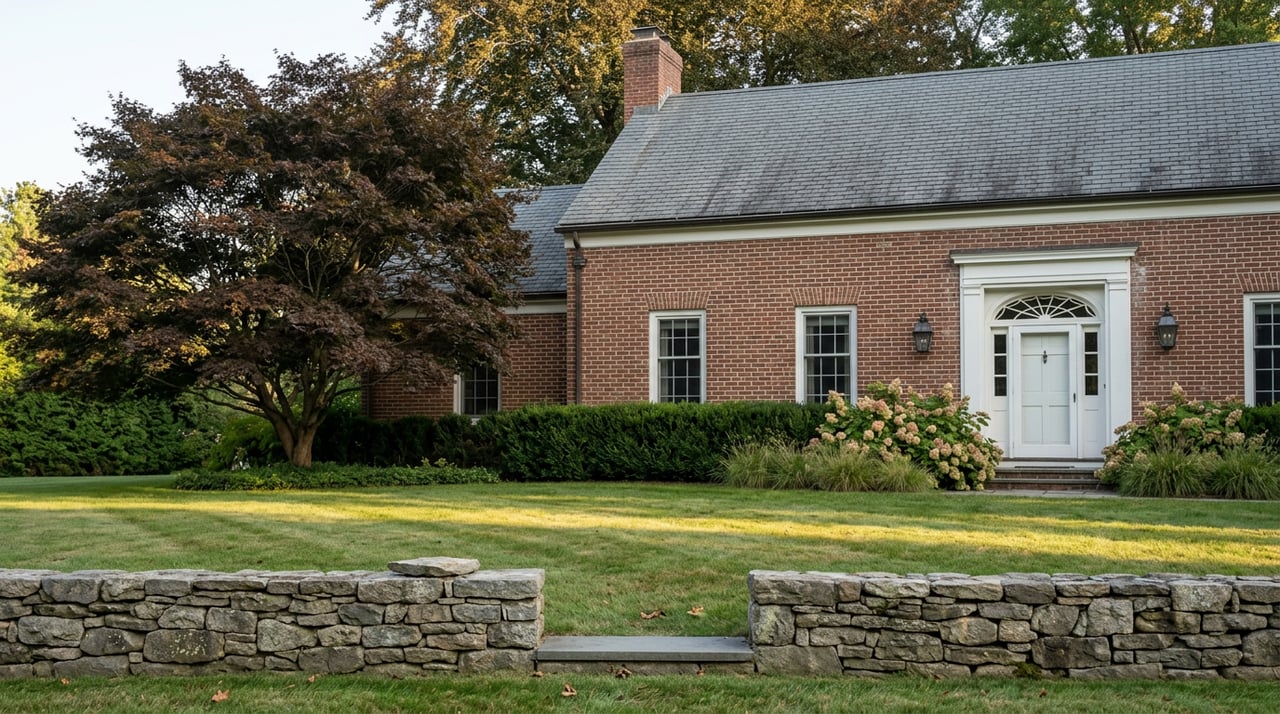
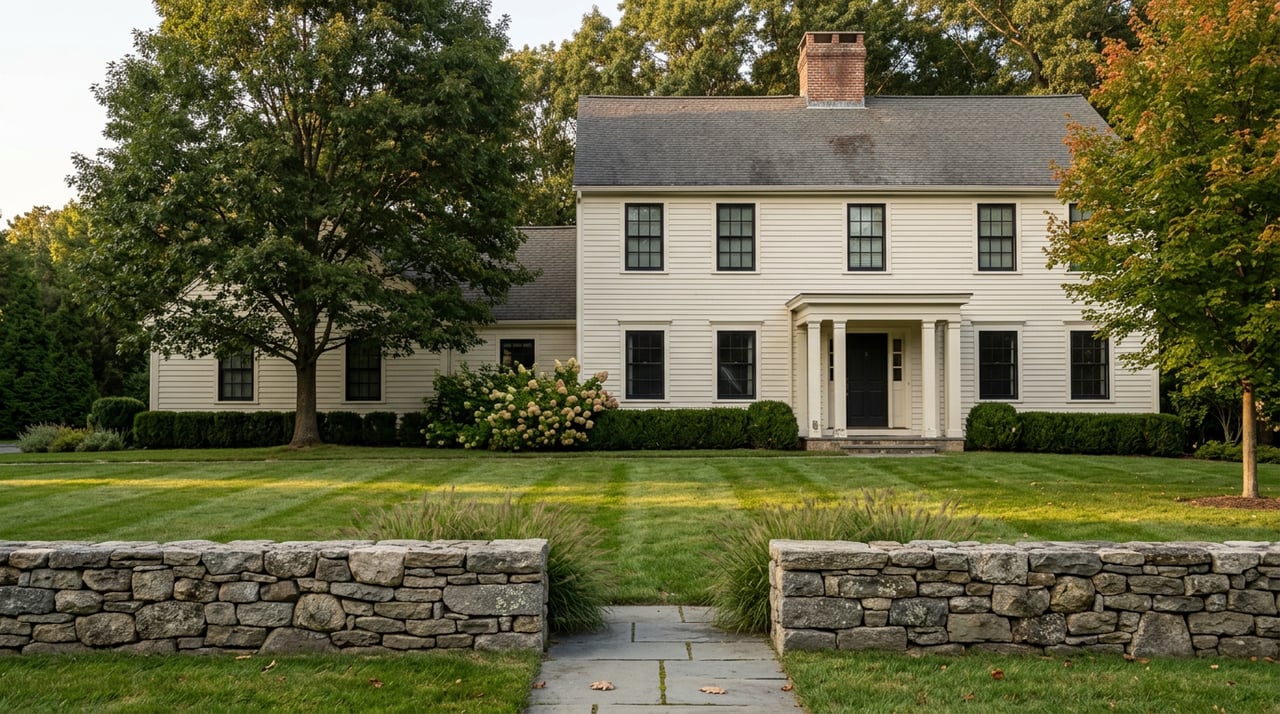
The West End and Prospect Hill. The estate tier. Homes here are typically pre-1940 Colonials, Tudors, and Victorians on generous lots, often in the 3,500 to 6,000 square foot range. Recent listings in the broader West End corridor near Scarborough Street have crossed into the $1.5M-plus range for fully reimagined properties. What your dollar buys is architecture and lot size that cannot be reproduced anywhere newer in Hartford County at any price.
Bishops Corner. Traditionally the more accessible entry point for single-family and condominium buyers. Somerset and Fernwood Estates offer over-55 and low-maintenance options, often listing well below the town median. Proximity to the Bishops Corner retail node and the West Hartford Reservoir drives demand from downsizers who want to stay in town after selling a larger West End or Prospect Hill home.
Elmwood and the south end. Smaller Capes, ranches, and mid-century Colonials. Historically the most affordable single-family stock in West Hartford, and the pocket most sensitive to the mill rate increase on a percentage-of-income basis. The FY28 capital plan includes a new Elmwood Community Center, which is worth tracking for anyone looking at long-hold value in this section of town.
Two things separate these pockets from a buyer's perspective. The first is what the house itself looks like at a given price. The second, more important, is how each pocket absorbs the tax increase. A $450,000 Elmwood Cape now carries a tax bill that would have bought the same house outright thirty years ago in some Hartford County towns. A $1.4M West End Colonial carries a tax bill larger than the sale price of a modest home in Litchfield County. The mill rate does not scale linearly with lifestyle. It scales linearly with assessed value.
The new ceiling, and what it signals
The most consequential development in the West Hartford market right now is not a resale. It is Center Park Place, a 58-unit luxury condominium project under construction at 2 Arapahoe Road, tucked behind LaSalle Road and Farmington Avenue in West Hartford Center. First residences are expected in September 2027, with pricing announced from roughly $1.2M to $2.5M and pre-construction pricing beginning near $900 per square foot. Residences range from one-bedroom units at about 1,230 square feet to two-bedroom-plus-den layouts above 1,500 square feet. Amenities include a rooftop terrace, heated pool, fitness center, lobby concierge, secure below-grade parking, and finishes from Sub-Zero, Wolf, and Bosch.
The Sebastian Group works within William Pitt Sotheby's International Realty, which was named the exclusive sales brokerage for the project in May 2026. The relevance for a relocation buyer is not the amenity list. It is what the pricing reveals about where West Hartford's ceiling now sits, and how quickly it rose. Five years ago, the top of the West Hartford condominium market was well under $700 per square foot in the same walkable radius. Center Park Place is establishing a comparable set that will influence appraisals on every luxury single-family sale in the Center and West End through 2028 and beyond.
The commercial signal reinforces the residential one. Lexham, the project's lead developer, confirmed in September 2025 that Ernst & Young leased more than 14,000 square feet at 1001 Farmington Avenue, effectively the entire building, as part of the same Center reinvestment cycle. Big Four office tenancy in a walkable suburban core is not a leading indicator most residential buyers watch, but it should be. It is one of the reasons the local absorption of $1M-plus product has held even as inventory has expanded.
How relocation buyers should read the comparison
Redfin's migration data for October through December 2025 shows New York as the top inbound metro for West Hartford searches, followed by Atlanta and Los Angeles. Only 23% of West Hartford searchers looked to stay within the metro. That mix explains why the town continues to see 65% of February 2026 sales close above asking, per Houzeo, and why hot homes go pending in under a week. Demand is being set outside Connecticut, by buyers whose reference price is a coastal median two or three times higher.
For those buyers, the practical comparison is not "West Hartford vs. Fairfield County." It is "West Hartford vs. Avon, Simsbury, Farmington, or Canton at total cost of ownership." Avon and Simsbury carry lower mill rates and different school and lot dynamics. West Hartford carries higher taxes, denser walkability, and a luxury condominium tier that is functionally unavailable in the Valley towns. A buyer who values a car-optional daily life pays for it in mills. A buyer who values acreage and lower carry pays for it in commute time and fewer restaurants within a ten-minute walk. Both are rational. Neither is captured in the median.
Three questions worth asking before you write an offer
Which pocket is the listing actually in, and how does that compare to the town median it was marketed against? A West End listing at $650,000 is a very different buy from a Bishops Corner listing at the same price. Ask the agent to pull sold comps within a quarter-mile radius rather than town-wide.
What is the assessed value on record, and when was the last revaluation? Connecticut law requires revaluation every five years. If the last one is aging out, the assessed value on file may not reflect current market, and a post-close revaluation can adjust the tax bill materially.
Are there any pending special assessments on the property? The FY27 and FY28 capital plans include street reconstruction, bridge replacement, and flood mitigation work. Most is funded through the general tax levy, but some infrastructure projects can generate district-specific charges billed separately.
The West Hartford market rewards precision. A buyer who knows which of the town's pockets they are actually shopping, and who has priced the mill rate into monthly carry before touring, negotiates from a different position than one working from a portal median. If you are weighing a move into West Hartford from out of state, or comparing it against Avon, Simsbury, or Farmington, Let's Connect. The Sebastian Group will walk you through the block-by-block detail the medians cannot.